Article Search By : Ms. Nor Anidah Rosli, Internal Audit Division UPM
Article By : Huzaime Hamid
Source : https://theedgemalaysia.com/node/759995
The recent disclosure by the US Department of Agriculture that Malaysia’s grocery bills are the highest in Asean sent shockwaves through the rakyat. Many of us have been griping about the cost of a full supermarket trolley for years; my own “record” was RM1,000 for a trolleyful. It was just a normal week’s groceries. I attribute those experiences to my increasing blood pressure.
India and Pakistan’s recent flare-up also sent agronomists into shivers; Malaysia imports a lot of beef, rice and almost all of its onions from India. If that got cut off due to a full-blown war, then roti bawang would become just roti canai, a tragedy for sure. Indeed, it appears that Malaysia has to import all of its onions. Why we do not grow our own needs is beyond me. Note that we do grow spring onions, but they are different from onions.
Recently, for my area’s e-delivery food service, which shall not be named, I noticed that many of the sellers had blanked out dishes that had beef. A check at the pasar tani showed that 1kg of tenderloin had increased in price by more than 10% to nearly RM50. Bear in mind that Malaysia imports most of its beef and at the time, conversely, the ringgit was gaining strength against the US dollar; so why did this happen?
The final straw to me was when I saw a seller putting a price on a takeaway dish of Nasi Beriyani Gam of RM27. Too much. We have plenty of chicken locally, so could it be because of the price of rice? Japan recently had to distribute its strategic rice reserve to combat sharply escalating prices. Hence, rice shortages are not just a Malaysian thing; however, if we continue to have to import rice, and the world faces a shortage of rice, where would we find rice to buy from? Further, if country after country faces rice production shortages, global prices can only go higher.
Why is this happening? Looking at the state of food production in Malaysia via the National Agrofood Policy of 2021 to 2030 (NAP 2.0), we came away shocked.
The good bit is that for chicken and poultry eggs, Malaysia exceeds its self-sufficiency levels (SSL). This means we can, and probably are, exporting to our neighbours.
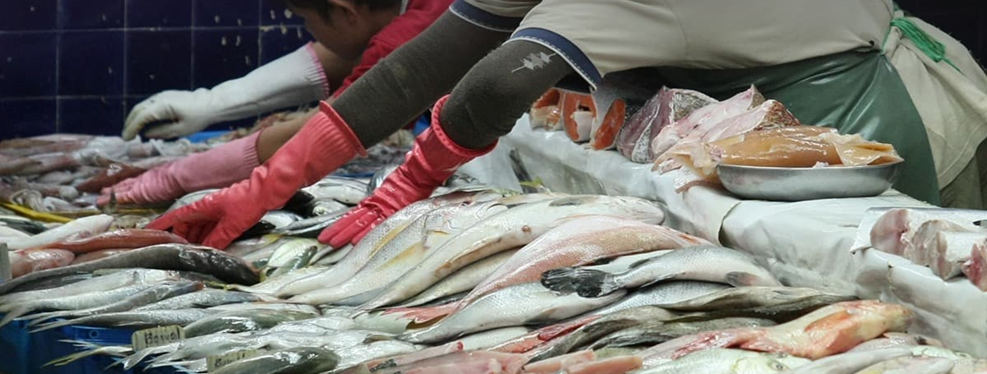
For fish, we are close to our SSL, at 93%, but as the NAP 2.0 pointed out, fisheries are in a state of tectonic shift, having to move away from traditional coastal fishing and going into deep-sea fishing. That means a reorganisation of the entire fishing industry, from getting new boats (from the small perahu, or row boats) to seaworthy trawlers, refrigeration facilities, training for deep-sea navigation, radio and radar equipment for each trawler and so on. In other words, upscaling, and at very high cost at that. According to Atlantic Shipping, a 30m fishing trawler costs some US$1.3 million (RM5.52 million). Larger vessels are price quoted upon request. Still, this gives an idea of the upscaling costs for fishermen.
In every other respect, we are woefully short of our SSLs. The list per the NAP 2.0 as at 2020 is as follows, inter alia:
- Vegetables at 51.5%
- Fruit 79.5%
- Milk 62.4%
- Mutton 10.7%
- Beef 21.7%
- Rice 63%.
Perhaps the most sensitive of all these food categories is rice. We understand that since the time of the NAP 2.0, the SSL for rice has dropped to an alarming 50+%. In our recent series of papers on the country’s food security, we tried to quantify what needs to be done using current yields. We proposed the strategy of opening up another 417,000+ hectares at the (current) yield of 2.14 tonnes per hectare (MT/ha). The alternative strategy was to increase yields to 3.41 MT/ha from 2.14 MT/ha. At such high yields, one has to worry about soil nutrition depletion, the high cost of refertilisation and how quickly such a step-up in yields can be achieved, among others. The massive amount of open land in Sabah and Sarawak gives ample opportunity for opening up new paddy fields. Sabah is already off the starting blocks on this.
Beef is the second category that we need to address. An SSL of 21.7% is a shame. After taking a look at how Argentina manages its beef production, it becomes speedily apparent that Malaysia is approaching it the wrong way. We are so tied up in feed-lotting (fattening cows for slaughter) that not only are margins paper thin, but the practice is unsustainable. How Argentina does it is exemplary — at the apex of its industry are the animal husbandry units (aka breeding farms), where cows are bred, before they are separated into milk cows and for slaughter. Argentina is the fourth-largest beef producer in the world. A quick check on the US beef industry, the world’s largest, shows it has the same structure, with animal husbandry at the very top. Malaysia would do well to emulate these countries’ strategies. The target to close the gap for Malaysia? Around 368,000 head of cattle, by our calculations.
In the NAP 2.0, fruit and vegetables are treated as one subcategory, although they have different SSLs. Clearly, they are separate types of food.
For fruit, the SSL is expected to improve to 83%, which is a gap that can be brought closer.
It is with vegetables that problems crop up. The 2020 SSL is 51.5%, which is expected to rise by 2030 to 78.9%; it is the reason for the rise that perplexes us. On page 156 of NAP 2.0 is the prediction that the consumption of vegetables in Malaysia will drop by 14.4% by 2030. In this day and age of healthy living and menu minding, vegetables have become even more important. Why then would consumption of vegetables drop?
We calculated the need for new plantings for both fruit and vegetables to reach their SSLs — for fruit, a further 20,000ha (the current size of land planted is 198,000+ hectares) while for vegetables it is at a further 60,000ha, a doubling of the current hectarage being planted.
We also must make note of a glaring omission of any strategic planning for pepper in the NAP 2.0. Malaysia is the fifth-largest producer of pepper in the world, yet there is nary a mention of it in NAP 2.0. In fact, for spices, only a few types are mentioned, with no SSL targets set or even measured. It is worth remembering that colonialisation in Southeast Asia started when Westerners wanted to profit from the spice trade. That is how important spices are.
Here then is the position where food security is concerned. Certainly, much more needs to be done. Going on as we are is only going to create shortages and escalating prices. Not only do Sabah and Sarawak have plenty of empty land to grow food, but a Federal Land Development Authority-like scheme for agriculture might be a good move to make.
The time to act is now.
Date of Input: 24/06/2025 | Updated: 01/07/2025 | muhammad.isam
MEDIA SHARING