Article Search By : Pn. Balqis Binti Md Ruslan, Bahagian Audit Dalam, UPM
By : Assoc. Prof. Dr. Irwan Shah Zainal Abidin, Senior Associate Fellow of the Economic and Financial Policy Institute (ECOFI), Universiti Utara Malaysia
Source : Berita Harian
When speaking at the Opening Ceremony of the Kuala Lumpur International Book Fair (PBAKL) 2026 recently, Prime Minister Datuk Seri Anwar Ibrahim hinted that Budget 2027 would introduce more austerity measures as the government's response to address the effects of the ongoing crisis and war in West Asia.
This is a timely and appropriate step to ensure that the well-being of the people remains protected in a situation where fiscal space is being affected due to the impact of geopolitical instability and ongoing wars in West Asia, the outcome of which is not yet certain.
The Prime Minister, who is also the Finance Minister, explained the knock-on effects of the attack by the United States (US) and its ally Israel on Iran, ultimately affecting the country's economy.
These effects, such as the increase in the cost of living for the people, although already occurring now, are expected to be fully felt in the third quarter of this year. Therefore, early preparations need to be made, as this crisis is expected to be protracted.
Even if it ends now, the recovery efforts to return to normalcy as before the war will certainly take several months or even years.
The impact of the West Asian conflict on the global energy market and supply chain, including Malaysia, could last until next year even though the Strait of Hormuz is fully opened this Friday following the agreement to end the war between the US and Iran.
While the shipping route could soon be back in operation, the recovery of global trade is expected to take longer.
The expected savings measures in the 2027 Budget are also a continuation of the proposed savings measures on Operating Expenditure based on the remaining Budget allocation for 2026 with expected savings of up to RM10 billion involving various ministries, departments and agencies at the end of April.
Unfortunately, some parties are distorting this government's actions with various accusations of irresponsibility, such as claiming that these cuts are being made to important expenses, especially from the Ministry of Health (MOH) and the Ministry of Higher Education (MOHE) and accusing this action of being a form of obsession with elections.
In reality, these proposed cuts are only for non-critical expenses without affecting basic and essential services to the people as well as the country's overall economic stability.
Recently, Anwar also gave an assurance that fuel prices would not be increased. This means that the government will continue to bear fuel subsidies every month in an effort to protect the people from the effects of rising global oil prices.
The government is expected to spend around RM3 billion to RM5 billion a month to cover fuel-related subsidies. Before the war in Iran, the monthly cost was only around RM700 million a month. The overall impact of subsidy expenditure this year is expected to be almost RM60 billion, which is expected in the 2026 Budget to be only RM15 billion.
Therefore, it is certain that the planning in the 2027 Budget will place a relatively high allocation on the subsidy and social assistance component under Operating Expenditure.
Channel Back To The People
Since the government cannot borrow under the Managed Loan and efforts in the form of structural reforms to increase the country's revenue level take time, the best course of action when it comes to spending next year is to implement austerity policies.
As a result of these savings, the government can and is expected to channel them back to the people with an increase in fuel subsidy spending and an increase in social assistance needed in a targeted manner.
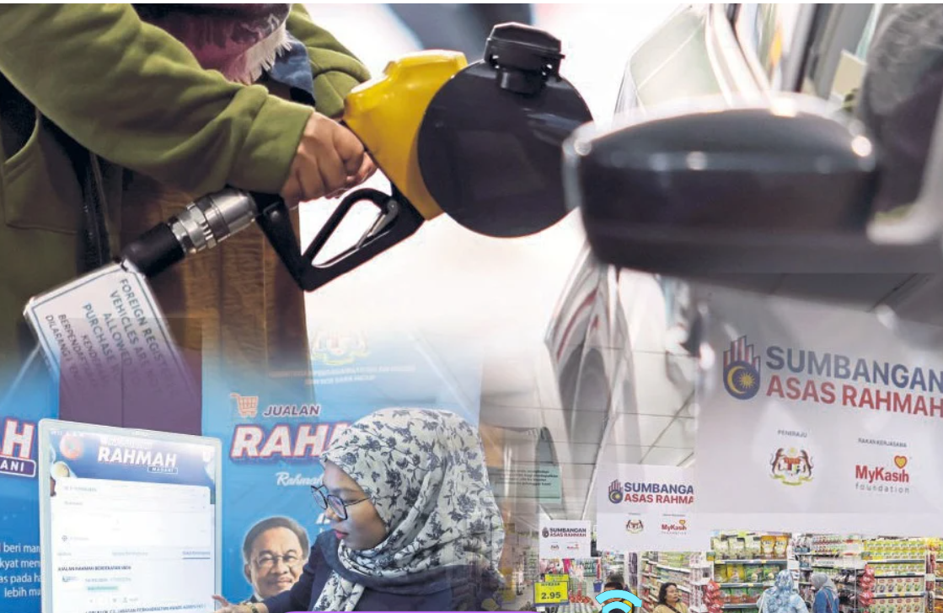
It is also like the expansion of the Subsidized Diesel Control System (SKDS) which now involves jeep and pickup vehicles, an increase in direct assistance to affected groups, such as increased assistance in BUDI Agro Commodities, BUDI Diesel, various immediate efforts such as increased special assistance to farmers and rice farmers or an increase in the Rahmah MADANI Sales Program.
In addition, direct assistance to people in need such as the Rahmah Cash Contribution (STR) and Rahmah Basic Contribution (SARA) is also expected to be continued and increased next year.
All of this is direct intervention from the government to ensure that the well-being of the people remains protected in the face of the uncertainties of this West Asian crisis.
The government's commitment not to increase existing debt is also the right initiative to prevent a worse fiscal situation in the future.
This is important so that government spending can be focused on aspects of increasing the country's economic competitiveness and the future productive capacity of the economy.
Date of Input: 22/06/2026 | Updated: 29/06/2026 | muhammad.isam
MEDIA SHARING